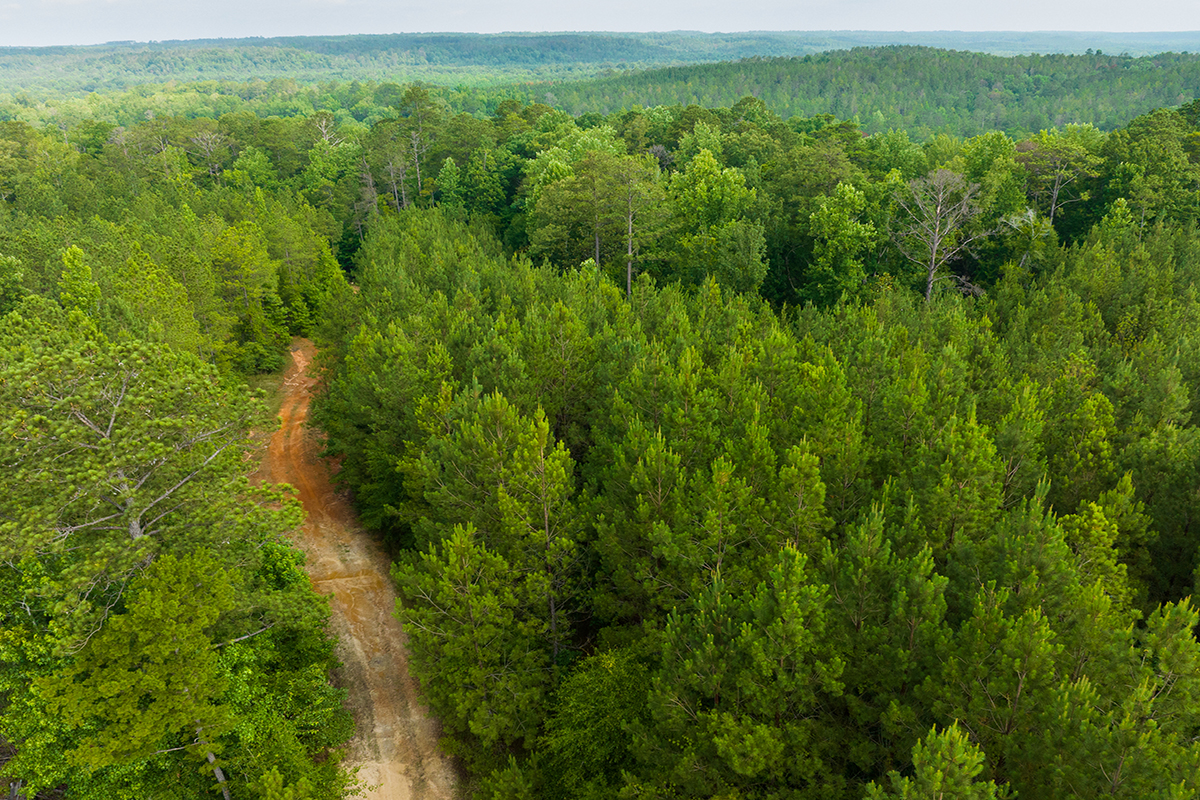
The Conservation Fund, America’s leading nonprofit in land protection, has acquired approximately 23,000 acres of at-risk forestland in the Red Hills region of southwest Alabama. The property, located in Monroe County between Mobile and Montgomery, contains prime habitat for numerous wildlife species, including the threatened Red Hills salamander. The Conservation Fund’s acquisition is a critical first step towards the forest’s future protection, and the national nonprofit will now work with partners and seek private philanthropic donors to help protect the forest in perpetuity.
This purchase, made possible in part with a $17 million loan from the Richard King Mellon Foundation, will ultimately ensure habitat protection, restoration, public hunting and fishing access, and climate change benefits, as well as economic opportunities via forest-related jobs and a potential new community forest. During its interim ownership, The Conservation Fund will hold and sustainably manage the property temporarily, securing the land from risks of being sold, converted or developed while working with private and public partners to implement permanent conservation strategies.
The 23,000 acres, now known as the Alabama Red Hills Salamander Forest, were acquired from leading impact real estate asset manager, Conservation Resources, which has sustainably managed the forest since 2009. The acquisition was completed through The Conservation Fund’s Working Forest Fund — an innovative forest conservation program dedicated to protecting natural ecosystems, mitigating climate change and strengthening rural economies.
During the next several years, The Conservation Fund will work with the Alabama Department of Conservation and Natural Resources (ADCNR) to protect critical habitat in the Alabama Red Hills Salamander Forest.
The Conservation Fund is also working with McIntosh S.E.E.D., a regional nonprofit, to explore the idea of developing a locally owned, 1,000-acre community forest on a portion of the land. The goal would be to offer local access and economic benefits from the working land’s resources. McIntosh S.E.E.D. works in the Deep South to improve neglected and low-wealth rural communities through asset-based economic development, education reform, empowerment and environmental preservation.
According to the USDA Forest Service’s 2023 state report, Alabama’s forest industry is the second leading economic driver in the state, employing over 40,000 people. The Alabama Red Hills Salamander Forest itself has a total economic impact of more than $10 million.