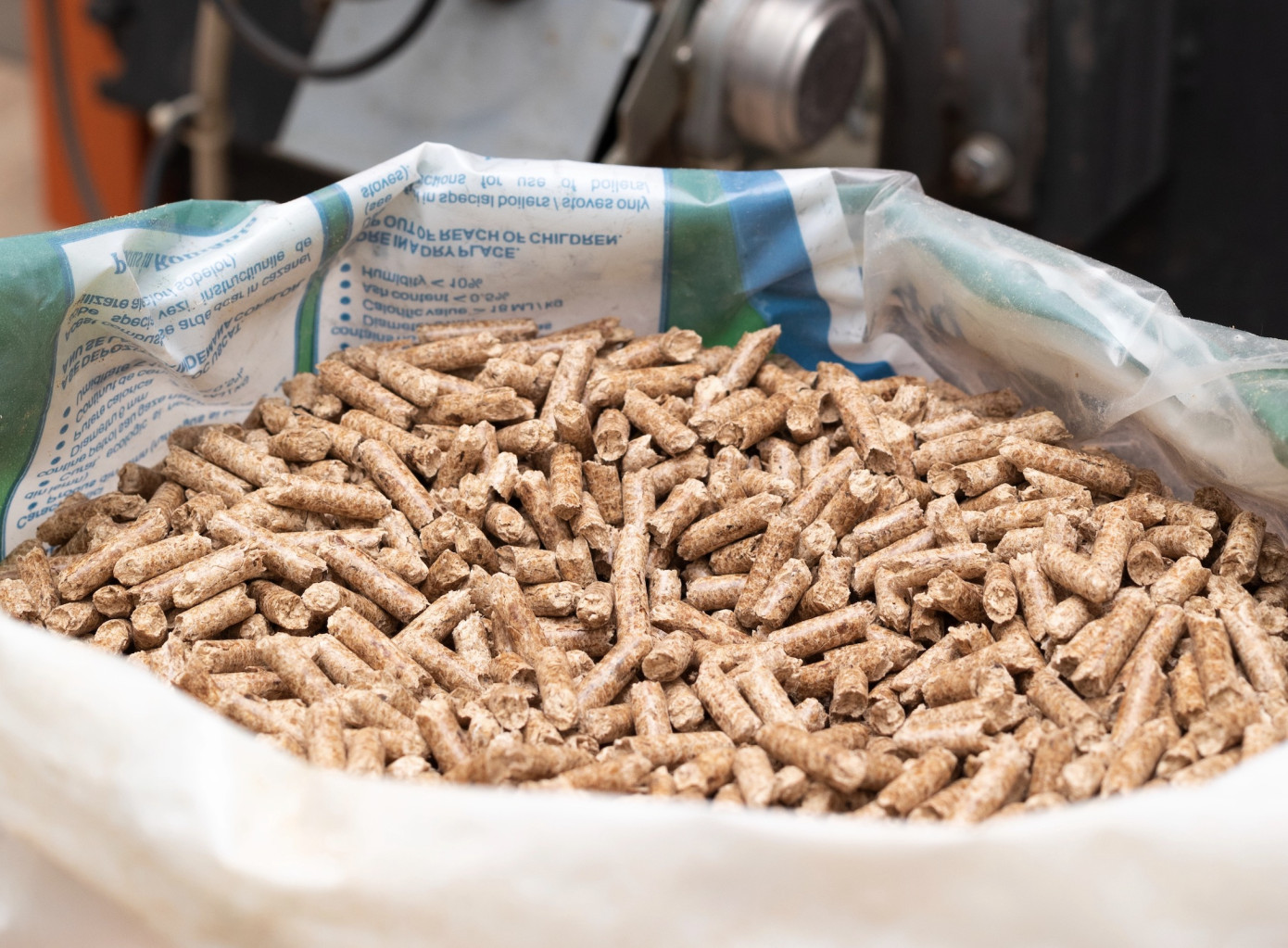
South Korea imported 3.91 million tons of wood pellets in 2025, down 3% from 2024, while import value rose 12% to $566 million and the average price increased 15% to $145 per ton. The figures also show 2025 volumes declined after a record 2024 level. Lesprom Analytics reported.
Vietnam remained South Korea’s largest supplier at 37% of imports, shipping 1.44 million tons, down 31% year on year. Indonesia increased shipments 76% to 0.90 million tons and raised its share to 23%, while Russia shipped 0.64 million tons, up 8%, for a 16% share.
Canada supplied 0.46 million tons, up 32%, and held a 12% share, while Malaysia supplied 0.24 million tons, down 10%, for a 6% share. Thailand shipped 0.12 million tons, down 12%, and the United States shipped 0.05 million tons, down 30%.
South Korea’s import volumes increased over the past decade, rising from 122 thousand tons in 2012 to 3.91 million tons in 2025, with the peak at 4.01 million tons in 2024. 图像: South Korea’s wood pellet import volume, 2012–2025 (thousand tons), showing a rise to a record 4,015 thousand tons in 2024 before easing to 3,908 thousand tons in 2025 / Lesprom Analytics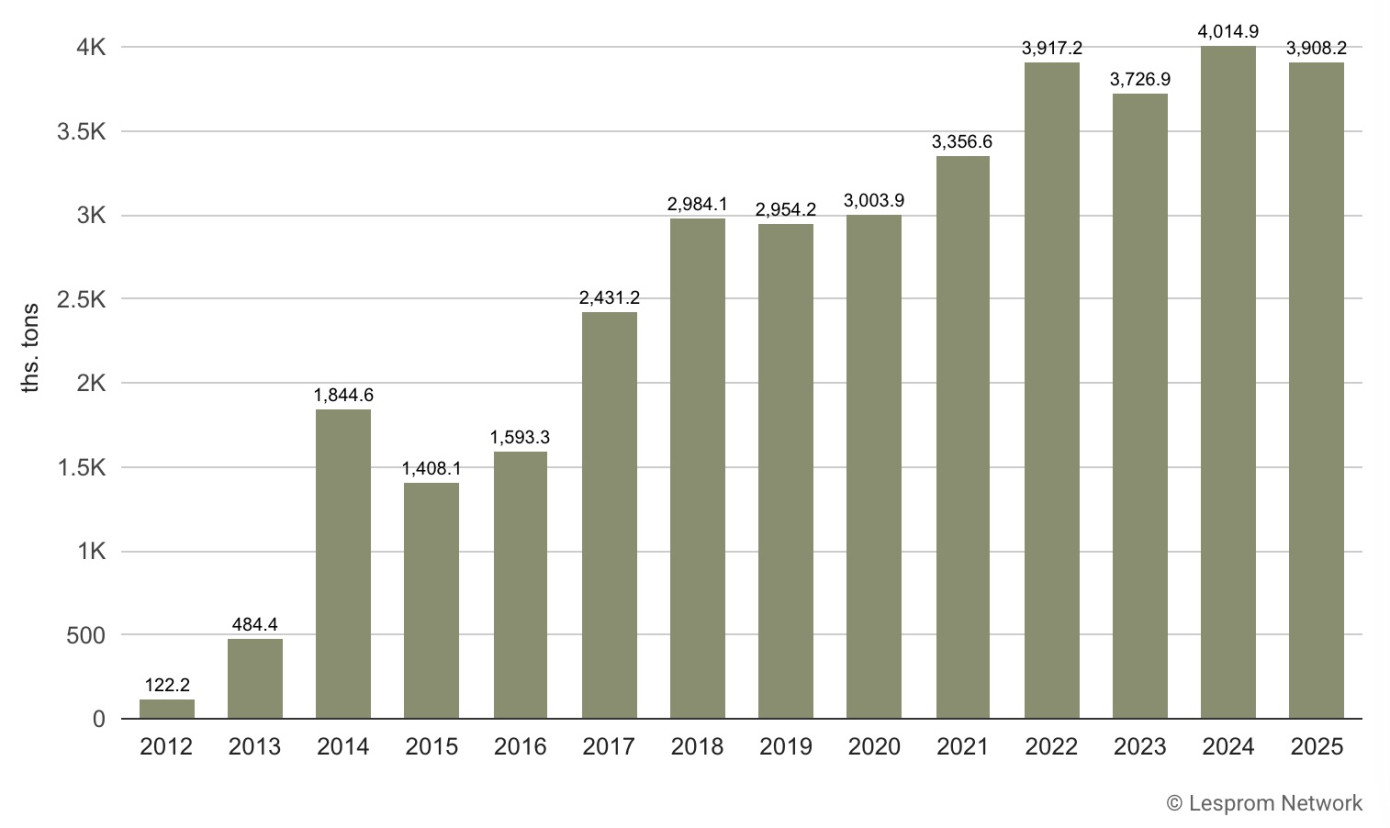
In late 2024, South Korea changed its Renewable Portfolio Standard rules that govern Renewable Energy Certificate eligibility for biomass power. The changes end certificate support for new biomass power plants, will end certificates for state-owned coal-and-biomass co-firing from 2025, will phase out certificates for private co-firing from 2026, and will lower certificate weightings for dedicated biomass power plants over time.