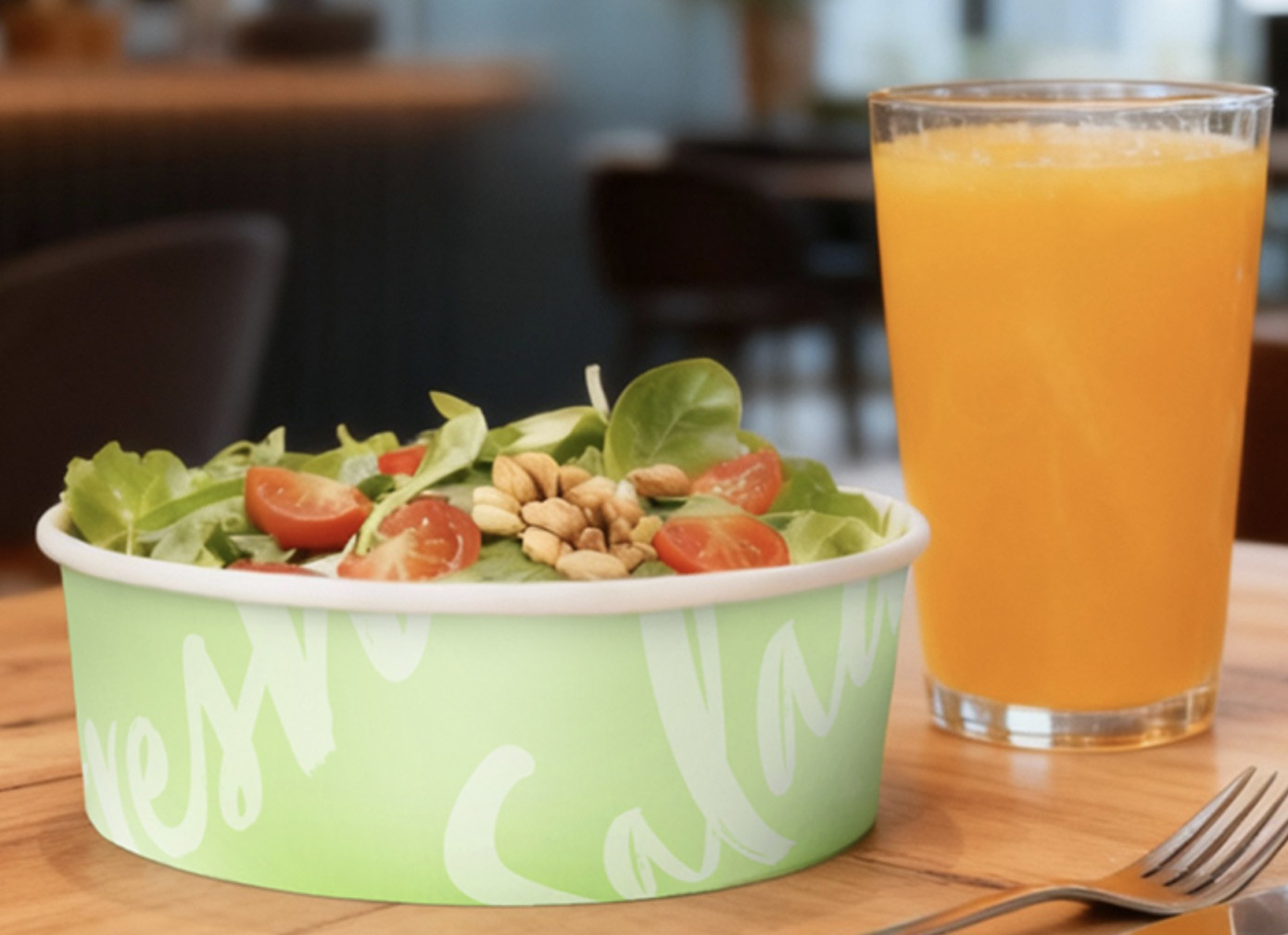
Metsä Board has completed a cradle-to-grave life cycle assessment comparing the carbon footprints of takeaway food trays made from PE-coated paperboard and fossil-based polypropylene, according to Metsä Board Corporation. The study was verified by independent reviewers from RISE and SimaPro UK.
The assessment used ISO 14040, ISO 14044, and ISO 14067 standards. The selected methodology was IPCC 2021 Climate Change: Total, including biogenic CO₂. Climate change impacts for competing materials used data from Ecoinvent 3.10.
The functional unit was a takeaway food tray that met required stiffness, functionality, and moisture-resistance properties. The PE-coated paperboard tray weighed 18.9 g, including 0.65 g of PE, while the polypropylene tray weighed 27 g. Technical background documentation and the third-party verification statement are available on Metsä Board’s website.
Under the European end-of-life scenario, the paperboard tray had a negative carbon footprint for the studied life cycle. The polypropylene tray’s carbon footprint was 0.112 kg CO₂e. For material not recycled under this scenario, 56% was assumed to be incinerated and 46% placed in landfill.
When assuming 100% incineration, the paperboard tray’s carbon footprint was 91% lower than that of the polypropylene tray. Multiple end-of-life routes were assessed to reflect regional conditions.
Recycling rates in Europe are higher for paperboard than for plastic packaging. Eurostat reports that 87% of paper and cardboard packaging was recycled in the EU in 2023, compared to 42% for plastic packaging.
Paperboard and plastic both contain carbon that forms carbon dioxide during incineration. Paperboard emissions are balanced by carbon absorbed during tree growth, while fossil-based plastics release new carbon to the atmosphere.
The share of fossil-free energy in Metsä Board’s production was 89% in 2024, and the company will aim to phase out fossil energy use in its mills by 2030. The study is part of a wider set of comparisons carried out to provide science-based information on packaging materials’ climate impacts.