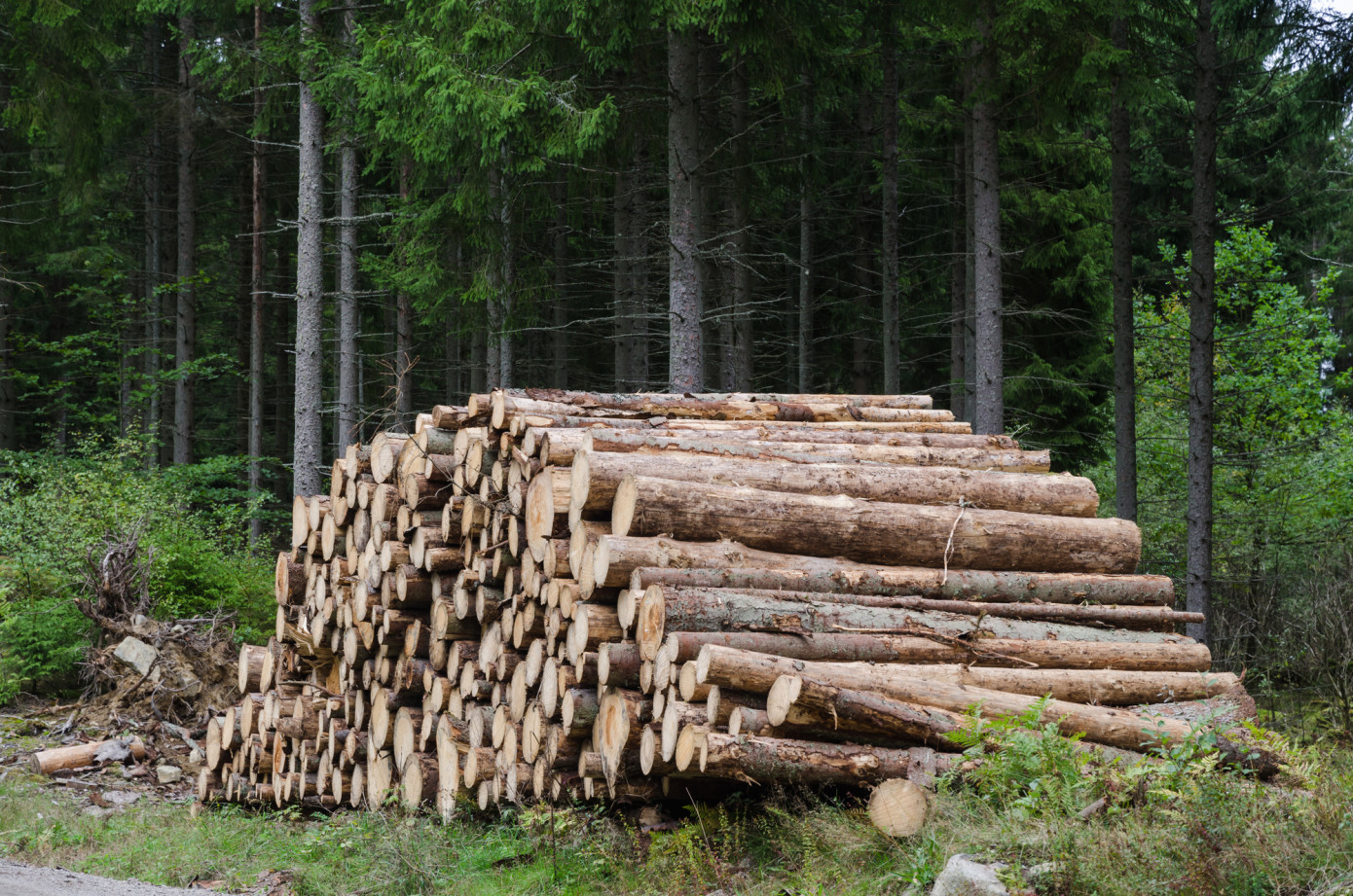
The annual felling of trees in Sweden remained at a record level in 2022. The total volume of standing trees felled was just under 96 million m3, a figure close to the previous year's record of 96.0 million m3, according to preliminary statistics released by the Swedish Forest Agency. This marks the second consecutive year of exceptionally high felling rates, excluding the years 2005 and 2007, which were affected by the storms Gudrun and Per.
The gross felling in 2022, including all harvested tree trunks, amounted to 95.8 million m3. Of this volume, approximately 48% consisted of saw logs from conifers, 42% of pulpwood, 8% of firewood, and the remaining percentage accounted for other types of wood.
Comparing the felling rates to the previous year, the statistics suggest a 3% decrease in the felling of conifer saw logs, a 3% increase in pulpwood felling, and a 2% increase in firewood felling.
Another notable trend highlighted in the report is the significant increase in the export of harvested roundwood. In 2022, approximately 3% of the Swedish harvest was exported, amounting to a preliminary volume of 2.0 million m3. This represents a substantial surge from the 1.2 million m3 exported in 2021. Additionally, imports of roundwood in 2022 reached a preliminary volume of 6.5 million m3, a slight increase compared to the previous year.
Final felling accounts for approximately 68% of the harvested volume, while thinning contributes 22%, with the remainder coming from other types of felling. The geographical distribution of the harvested volume shows that 35% originates from Götaland, 33% from Svealand, and 32% from Norrland.
On average, the period from 2017 to 2021 saw a felling volume of 259 m3 standing volume per hectare in final felling and 72 m3 standing volume per hectare in thinning. The annual average area for final felling during the same period was approximately 251,000 hectares, while thinning covered around 290,000 hectares. Compared to the preceding five-year period, the final felling area has witnessed a 9% increase, while thinning has decreased by 5%. Notably, branches and tree tops were removed for energy purposes in 33% of the final felling areas.
Regarding tree species, spruce accounted for over half of the harvested volume, followed by pine, which constituted approximately one third, and broadleaves, which represented just over one tenth.
In terms of forest ownership, the average final felling area for fellings larger than 0.5 hectares in 2021 was 3.3 hectares. Notably, the average final felling area in Northern Norrland was more than double the size of those in Götaland, with 5.2 hectares and 2.3 hectares, respectively. Furthermore, individual forest owners had an average final felling area approximately 40% smaller than that of other forest owners.